
The family piles into the car for a weekend camping trip, and you get behind the wheel and start to accelerate. Instantly, the transmission gears slip. You watch the temperature gauge skyrocket. Grinding sounds commence.
Don’t let these car troubles keep you from having a good time. With a little bit of transmission maintenance, you can keep your vehicle functioning safely through every season. All you need are some tips for preventing your transmission from overheating.
Promptly Repair Damaged Transmission Gears
Damaged gears increase friction within the transmission system. This friction generates excess heat, which leads to overheating and more severe issues.
Not to mention, ignoring this flaw may contaminate and expedite the degradation of transmission fluid, too. Swiftly caring for damaged gears will protect your transmission while maintaining a safe operational temperature.
Change the Transmission Fluid Every 30,000 to 60,000 Miles
The quality and amount of transmission fluid are the primary concerns of your vehicle. Without sufficient fluid, your transmission is sure to overheat.
A mechanic should change the transmission fluid every 30,000 to 60,000 miles. The transmission fluid acts as a lubricant for all the moving parts within the transmission system. Over time, dirt, debris, and metal shavings from normal wear and tear can contaminate this fluid. This can cause it to lose its ability to properly lubricate the components, resulting in increased friction and heat buildup.
Regularly changing the transmission fluid ensures that it remains clean and free from any impurities that could potentially cause damage or hinder its performance. It also helps maintain proper viscosity levels to ensure smooth and efficient operation of the transmission.
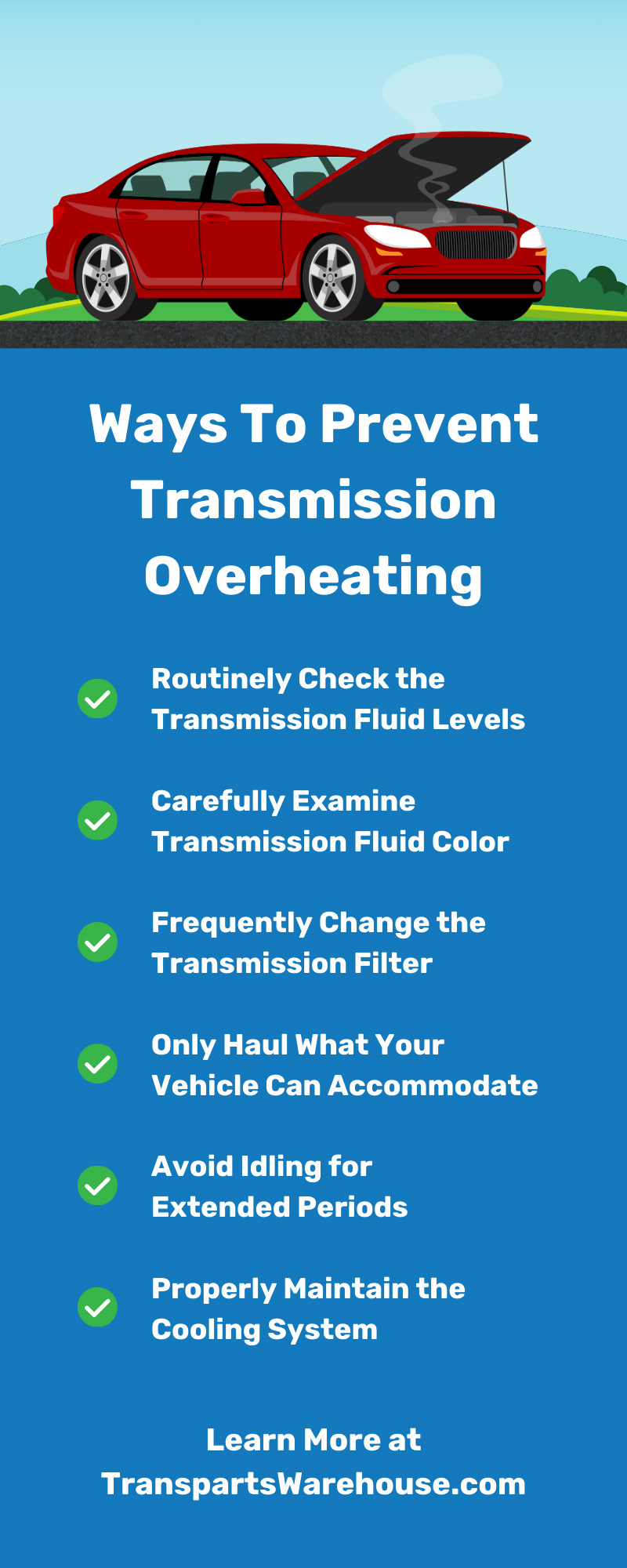
Routinely Check the Transmission Fluid Levels
Transmission fluid must be at the proper level to prevent overheating. Start by parking your vehicle on a level surface and letting the engine run until it reaches its normal operating temperature. Next, locate the dipstick.
Pull out the dipstick and wipe it using a rag. Insert the dipstick again, then examine where the fluid lies. The dipstick will have markings indicating the optimal fluid level range.
Be cautious and check the level once a month. This routine examination ensures there’s ample fluid to lubricate the transmission and prevent overheating.
Carefully Examine Transmission Fluid Color
While you’re checking the fluid levels, be sure to examine the color, too. Transmission fluid is typically a bright, clear red. This hue indicates that the fluid is in good condition and capable of effectively lubricating and cooling the transmission components.
If the fluid appears dark brown or black, it is a sign that the transmission fluid is no longer as effective. This could be due to contamination, oxidation, or excessive heat. Dark fluid may contain debris or burnt particles, indicating that it is no longer providing adequate protection and requires immediate replacement.
A milky or foamy appearance in the transmission fluid can signal the presence of water contamination. This water could come from a leaking cooler line or a compromised gasket. Water in the transmission fluid reduces its effectiveness and can lead to overheating.
Frequently Change the Transmission Filter
The transmission filter traps contaminants like dirt, metal shavings, and other debris. These impurities can enter the transmission fluid through normal wear and tear or external sources. The filter ensures that only clean fluid circulates through the system, maintaining optimal lubrication and cooling.
A clogged transmission filter can adversely affect the transmission’s performance. It restricts fluid flow and results in insufficient lubrication of transmission components. Therefore, excessive friction commences and causes higher operating temperatures.
Preventing transmission filter clogs is key to avoiding overheating issues. Every 30,000 miles, switch out the filter to ensure a steady flow of clean fluid.
Only Haul What Your Vehicle Can Accommodate
It’s typical for truck owners to haul campers and SUVs to pull small trailers. However, surpassing your vehicle’s weight limit is a quick way to expedite transmission failure.
Overloading imposes excessive stress on the transmission and drivetrain, forcing them to work harder than intended. The temperature rises and causes quicker destruction of transmission fluid, so it loses its lubricating and cooling properties.
Manufacturers specify towing capacities and payload limits based on multiple factors and components. Adhering to these limits is essential for optimal performance, longevity, and safe driving.
Avoid Idling for Extended Periods
Extended periods of idling can lead to a rise in transmission temperatures. When the vehicle idles, the transmission fluid is not circulating efficiently. This issue can result in inadequate cooling and lubrication of internal components, increasing the likelihood of overheating.
Additionally, prolonged idling causes the engine to operate without optimal airflow, exacerbating the rise in temperatures. The heat generated puts unnecessary stress on the transmission system.
Properly Maintain the Cooling System
The cooling system in a vehicle is crucial for managing the temperature of components such as the engine and transmission. The system includes the radiator, cooling fan, water pump, thermostat, and coolant. The radiator dissipates heat from the coolant, and the cooling fan ensures sufficient airflow. The water pump circulates coolant, and the thermostat regulates its flow based on temperature. Maintaining these components prevents excessive heat buildup.
An efficient cooling system operation helps regulate transmission temperature. For a prolonged lifespan and high-performance transmission, you need to maintain the cooling system, too.
Regularly check and top off the coolant level with the appropriate type. Inspect the radiator and hoses for leaks, cracks, or blockages, and replace damaged parts promptly. Ensure the cooling fan operates correctly by listening for abnormal noises or checking during engine idling. Inspect the water pump for leaks or wear and test the thermostat for functionality. Regularly flush and replace the coolant every 30,000 to 60,000 miles to remove debris and maintain efficiency.
Install a High-Performance Transmission Cooler
Automatic transmission coolers operate by increasing the surface area through which heat can dissipate, utilizing air or liquid to further lower fluid temperatures. They are particularly beneficial for vehicles frequently subjected to heavy towing, carrying substantial loads, or enduring arduous driving conditions.
Selecting the right cooler depends on your vehicle’s specifications and intended use. Installation typically involves mounting the cooler in a location with adequate airflow, often in front of the radiator, and connecting it to the transmission lines. Reducing the transmission fluid temperature with a high-performance cooler will maintain your vehicle’s safety and efficiency.
All you need is a little bit of guidance and the right tools to keep the transmission cool and competent. By implementing these ways to prevent overheating transmissions, you can trust that your vehicle is ready for any adventure.