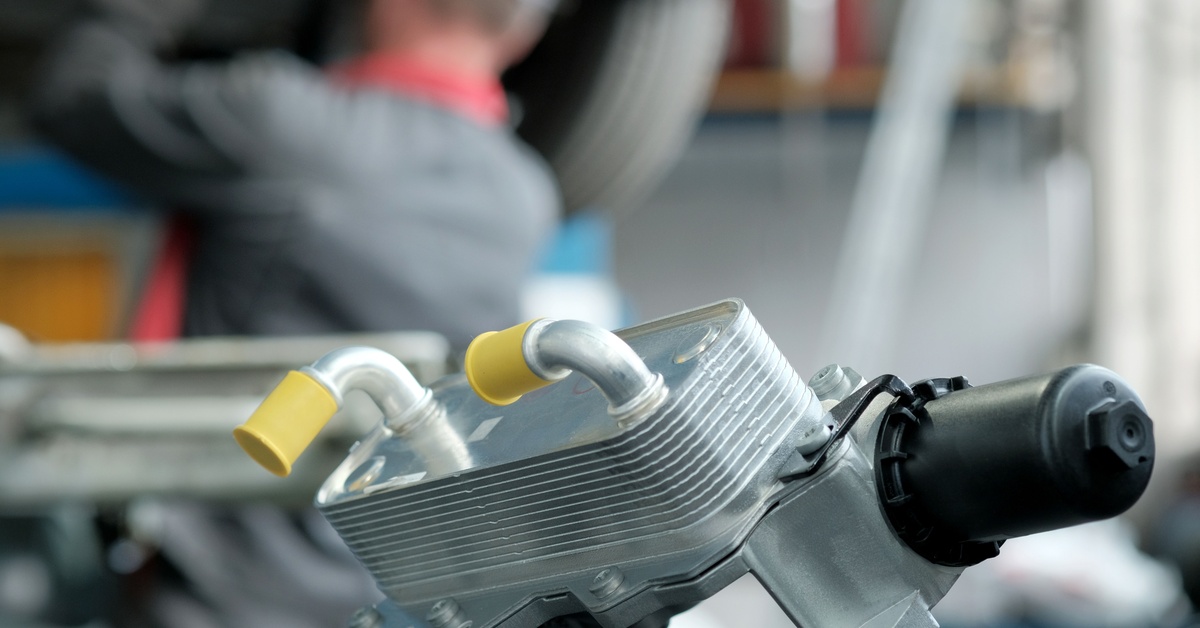
Transmission cooler lines carry pressurized fluid between the transmission and cooler, so a fitting that looks close enough could still leak or damage threads. Matching transmission cooler line thread pitch and seals means identifying how the threads engage and where the connection seals before tightening anything. Careful inspection prevents crossed threads, damaged seals, and fluid seepage.
Match Diameter and Thread Pitch
Thread pitch describes the spacing between threads, and manufacturers express that measurement according to the fitting standard. Measure the outside diameter and pitch with the proper gauge, or verify the vehicle and cooler specifications. If a fitting binds after one or two turns, stop rather than forcing it into the port.
Identify the Sealing Surface
A threaded connection doesn’t always seal at the threads themselves. Inverted-flare fittings seal where the mating metal seats contact, while O-ring boss fittings rely on an O-ring against the sealing surface. Tapered pipe threads seal along the threaded interface and typically use suitable sealant according to manufacturer instructions. Identifying the sealing method first prevents an installer from treating every threaded fitting alike.
Inspect the O-Rings Before Assembly
Small seal defects lead to seepage once fluid pressure and temperature rise. Check each O-ring for cuts, flat spots, swelling, hardening, or twisting before installing. Replace a damaged seal with the specified size and material, and apply a lubricant. The O-ring will sustain even contact around the port with proper seating.
Use Sealant Only Where Specified
Thread sealant belongs on connections designed to seal through their threads, not automatically on every cooler line fitting. Tape or compound on an inverted-flare or O-ring connection interferes with the intended sealing surface and could introduce debris into the fluid circuit. When instructions call for sealant on tapered pipe threads, use the approved product as directed. Sealant won’t correct the wrong pitch or damaged threads.
Tighten to the Correct Specification
Excess torque distorts the sealing area and harms the threads. It may force an O-ring out of its intended position, while too little torque leaves room for movement and fluid seepage. Use the torque value specified for the exact connection. Then, hold adjoining components gently to avoid twisting the line. After installation, run the vehicle and inspect each connection for fresh fluid.
Verify Fit Before the Fluid Circulates
Careful cooler line thread pitch and seal matching protect the connection during assembly. Before fluid circulates, confirm the fitting type, pitch, sealing surface, and installation specification one final time.
When replacement cooling equipment becomes part of the repair, browse the trans oil coolers and components at Transparts Warehouse. Our team will help you find the product that suits your vehicle’s specifications.


