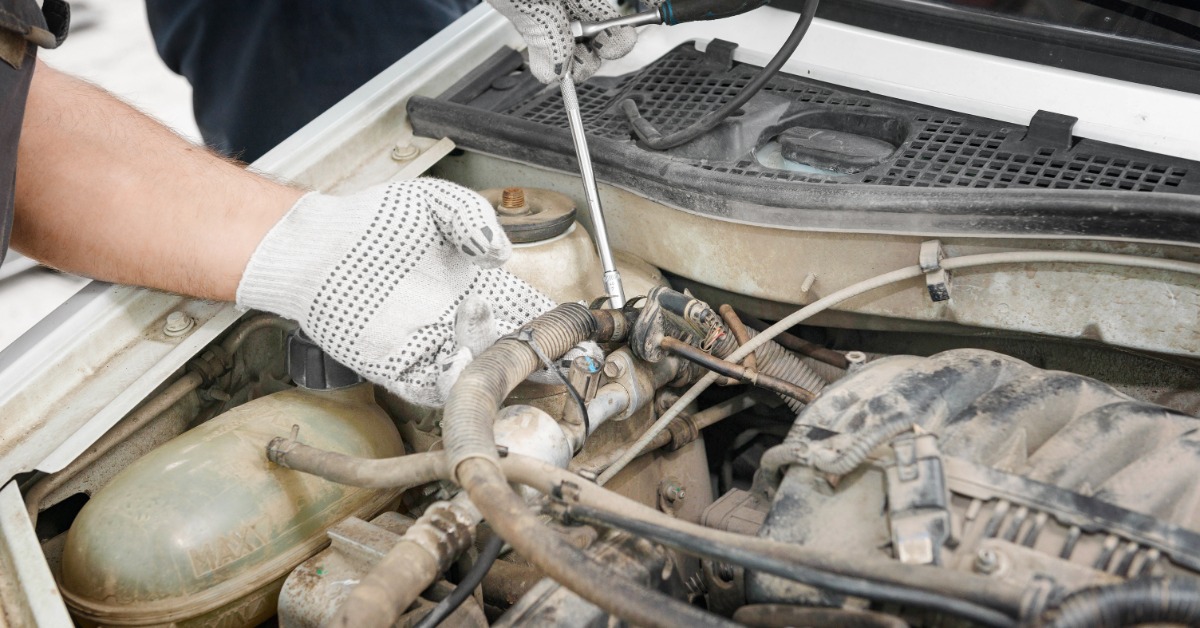
Transmission fluid has to move through a cooling circuit without picking up extra heat, losing flow, or rubbing against nearby hardware. Line routing influences each of those conditions, so a properly sized cooler can underperform when the hoses take a poor path. Choosing cooler line routing for maximum efficiency means planning a direct, protected route that helps hot fluid reach the cooler and return with minimal restriction.
Keep Lines Away From Heat
High exhaust temperatures work against the cooling system before fluid reaches the heat exchanger. A hose that passes close to intense heat sources, such as exhaust manifolds and turbo components, absorbs extra heat and demands more of the cooler. Route lines through cooler areas of the engine bay whenever space allows. If the vehicle layout forces a line near a heat source, add heat protection suited to the temperatures and materials involved.
Preserve Smooth Fluid Flow
Every unnecessary turn or restriction interferes with the steady movement of transmission fluid. Tight bends may pinch flexible hose, and undersized fittings create narrow points that force fluid through a smaller passage.
Use gradual bends, keep the route as direct as the vehicle layout permits, and match hose and fitting sizes to the transmission and cooler specifications. Avoid adding extra hose length simply to create a simplified route. The excess slack introduces more places for the line to sag or shift.
Secure Lines Against Abrasion
Vehicle vibration keeps unsecured cooler lines in motion, even when the hoses appear stable with the engine off. Repeated contact with brackets, frame edges, and sheet metal wears the hose.
Secure the lines at sensible intervals with hardware suited to the hose type, and use protective grommets or sleeves anywhere a line passes through or near an edge. Leave enough clearance for steering, suspension, engine movement, and service access so nearby components don’t rub or pull against the line.
Plan the Cooler Sequence
Flow order affects how an auxiliary cooler works with the factory cooling circuit. Many installations route fluid through the radiator-integrated cooler first. Then, through the auxiliary cooler before it returns to the transmission. This will allow the external unit to remove additional heat near the end of the circuit.
However, transmission designs and cooler kits differ. Verify the correct inlet, outlet, and return path through vehicle service information and the cooler manufacturer’s instructions. Proper identification prevents accidental reverse routing or bypassing a factory component that belongs in the circuit.
Use Routing To Protect Cooling
Choosing cooler line routing for maximum efficiency gives the cooling system a stronger foundation because the fluid path remains direct, protected, and compatible with the vehicle’s existing components. When the project calls for additional heat control, review the transmission coolers for sale from Transparts Warehouse. You’ll find a cooler that fits the transmission and expected workload.


