
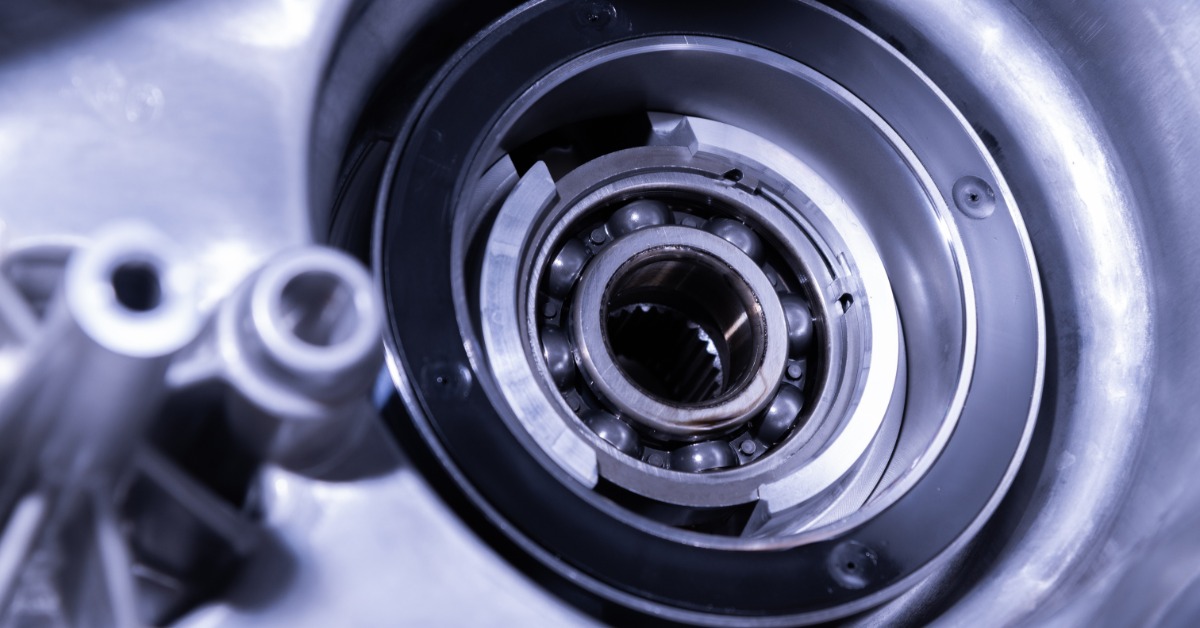
Once lubrication drops, the bearings inside the transfer case suffer extra friction. Continued fluid loss leaves lasting damage inside the assembly even after a technician installs a new seal. A reseal stops the visible leak after installation. However, it won't reverse mechanical damage already affecting movement or power delivery. Due to those lingering symptoms, a simple transfer case reseal isn't enough to repair internal wear on critical components.
Low Fluid Has Damaged Bearings
Bearings support shafts inside the transfer case as gears and sprockets rotate under load. Fluid loss strips away the lubrication bearing surfaces rely on to control heat and friction. Continued driving scores bearing races and damages rollers, causing humming and grinding noises. Fresh seals close the leak source, but damaged bearings will continue to produce noise until the repair addresses the worn surfaces.
Chain Wear Causes Slipping
Chain-driven units transfer torque between sprockets through a metal chain. Low lubricant levels or high mileage wear chain links and increase slack inside the case. Under acceleration, excessive slack lets the chain travel poorly across the sprockets and produces banging or slipping sensations. Replacing seals won't restore chain tension because no sealing surface controls link wear.
Worn Shift Forks Disrupt Engagement
Shift forks move internal collars into the selected drive mode inside many transfer cases. As fork surfaces wear, engagement becomes shallow and four-wheel drive slips out under load. Drivers notice inconsistent shifts or trouble holding the selected mode after a reseal. New seals leave this mechanical problem untouched because the worn fork cannot position the collar securely.
Damaged Sprockets Disrupt Power Delivery
Sprocket teeth must mesh evenly with the chain to transmit torque through the transfer case. Chain slack and poor lubrication wear tooth surfaces until engagement loses its smooth pattern. Rounded or chipped teeth can produce clunks or slipping under acceleration. New seals preserve fluid after repair, though they don’t rebuild damaged sprocket teeth.
Pump Wear Restricts Lubrication
Many transfer cases use an internal pump to distribute fluid across moving parts. Pump wear or damage weakens circulation and exposes internal surfaces to continued heat and friction. A reseal addresses fluid escaping outside the housing. Internal pump trouble continues to limit lubrication even after the leak disappears. Persistent noise or repeated wear warrants inspection beyond the seals.
Repair Each Component of the Transfer Case
Once internal parts suffer considerable wear, resealing alone won’t restore transfer case performance. A thorough inspection traces symptoms to worn hardware before the technician selects replacement parts. When a simple transfer case reseal isn’t enough, matching replacement parts to the exact transfer case model supports a complete mechanical repair.
Transparts Warehouse carries transfer case components ranging from chains to pumps to bearings. Matching the component to the exact unit keeps the repair focused on the damaged hardware behind the symptoms.


