A faint hum during a turn or grease near a wheel might seem harmless. However, those clues sometimes point to lubrication loss or joint wear across the parts that transfer power to the road. Routine checks expose minor conditions before vibration and heat damage connected components.
The goal of preventing driveline failures is to preserve smooth movement. Incorporate these steps into your vehicle maintenance checklist to keep the entire machine in good condition.
Maintain Correct Tire Pressure
Small pressure changes affect the driveline’s balance. When air pressure drops, the tire’s rolling circumference shifts. The sidewall flexes more than necessary due to increased heat buildup. Furthermore, uneven inflation results in slight speed differences between wheels. This causes added strain on all-wheel-drive and four-wheel-drive systems.
Consistent inflation ensures that each drive is stable and decreases strain on the driveline components. For most passenger cars, a general range is commonly 32–35 PSI, while many light trucks and SUVs typically run between 35 and 40 PSI. Confirm the exact PSI specification by checking the driver-side door jamb for the value.
Lubricate Serviceable U-Joints
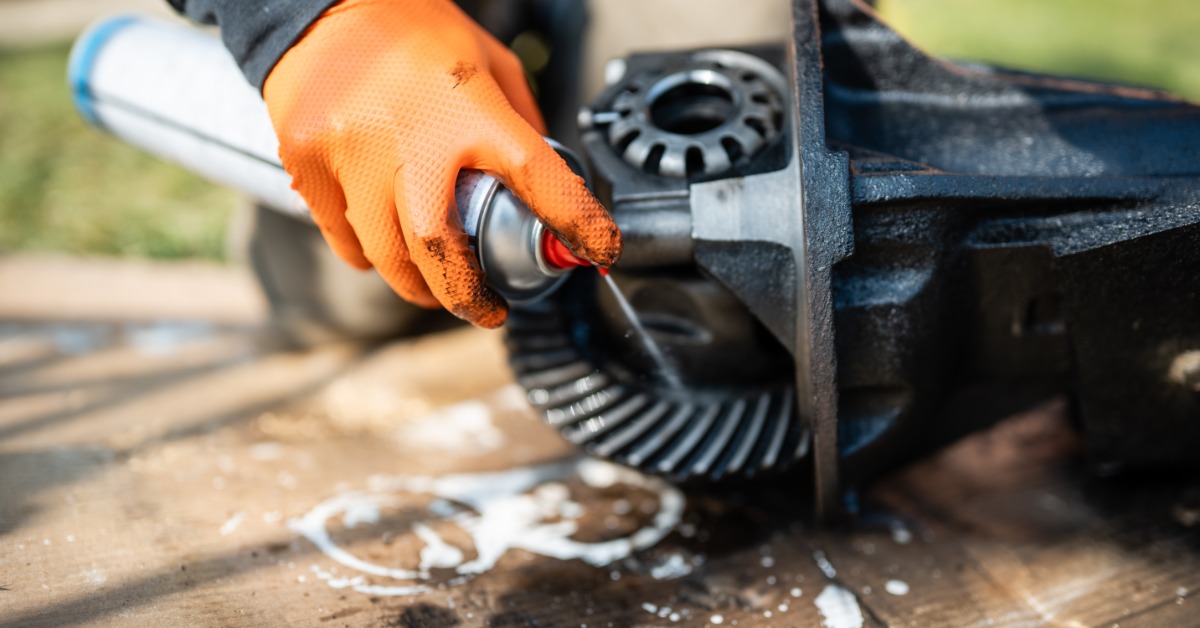
Serviceable universal joints (U-joints) rely on grease to protect their needle bearings as the driveshaft changes angle during operation. During routine maintenance, inspect each joint closely and look for dry seals or reddish rust powder. After inspection, apply grease to sustain smooth movement under load.
Keep in mind that not all U-joints permit servicing because some use sealed designs that don’t accept grease fittings. In those cases, check the joint for looseness or binding during regular inspections.
Change the Differential Fluid
Differential gears handle torque every time the vehicle accelerates or turns. The constant load places steady pressure on the gear teeth. Gear oil cushions those contact surfaces and carries heat away from the bearings, yet heat buildup and contamination gradually weaken its protective qualities over time. Changing the fluid regularly ensures that the gear oil lubricates and cools the gears, limiting friction and driveline wear.
Inspect Transfer Case Seals
A transfer case distributes power between the front and rear axles in four-wheel-drive and many all-wheel-drive vehicles, so it relies on a steady supply of clean fluid to protect its internal chains and bearings. When fluid levels drop, friction increases quickly, and that added heat can accelerate wear across the entire unit. Even a small seal leak can decrease lubrication slowly.
First, check the housing and drain plug for any signs of dampness or residue. Then, move to each output seal where the driveshaft connects. These areas commonly show the earliest evidence of seepage.
Replace Transmission Filters
Transmission filters trap debris before it moves through valves, passages, and other sensitive internal components. When the filter begins to clog, fluid flow drops, and the transmission may respond with delayed engagement or rough shifting.
Most vehicles benefit from a transmission filter change between 30,000 and 60,000 miles, although driving habits and operating conditions can shorten or extend that range. Always double-check the manufacturer’s recommendations for your specific vehicle, since service intervals vary widely between makes and models.
Safeguard the Driveline
Transparts Warehouse supplies automatic and standard transmission components, transfer case parts, and transmission coolers to support that process. Anyone planning repairs or upgrades should match these performance transmission parts to their vehicle’s exact transmission model and driving demands. Durable parts and prompt repairs will prevent the driveline from failing no matter the conditions.


